Key takeaways from IWPC Automotive Radar and ADAS Evolution Workshop
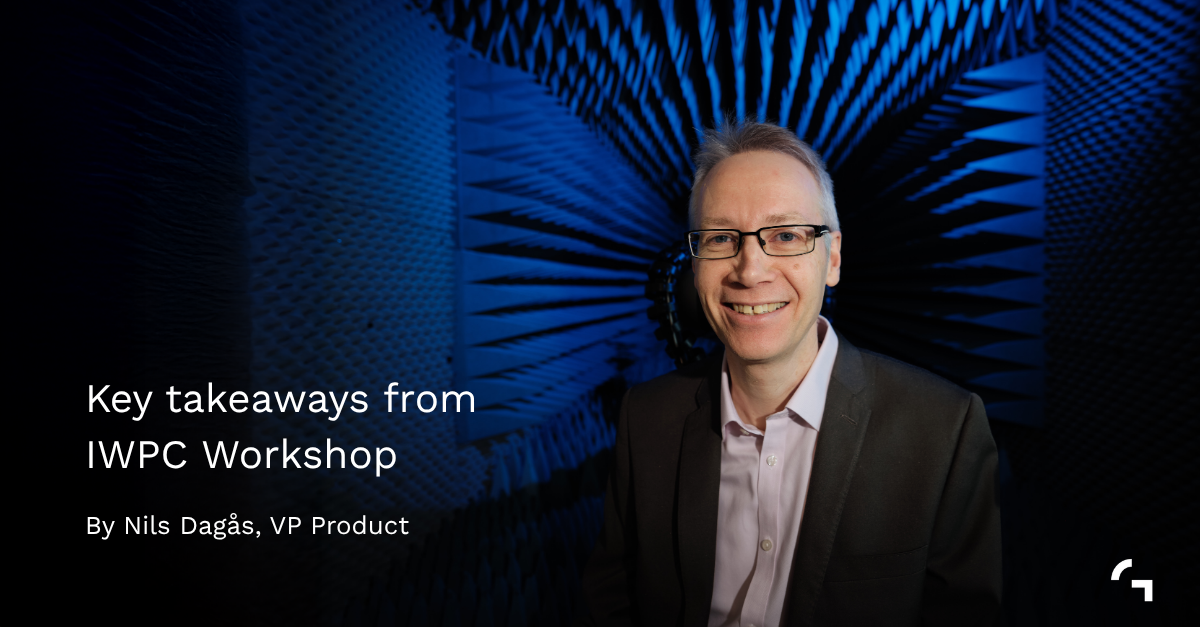
Nils Dagås, Gapwaves VP Product, attended the IWPC Automotive Radar and ADAS Evolution Workshop in Munich. Here are his takeaways:
The centralization debate is real, even though edge architecture still has a long runway
Most OEMs and Tier 1s are still committed to edge architectures – there is still performance to extract from current setups. Centralization is genuinely interesting: it can mitigate sensor interference, reduces electronics, and moves heat away from where it is hardest to manage. It will favor those who can deliver efficient processing with high compute, low energy and small size. It also introduces a single point of failure: graceful degradation becomes harder. Centralization becomes most relevant at L3 and L4, where the vehicle takes responsibility, not the driver. We are not there yet at scale.
L2+, L2++, L2+++: the new L3/L4
L3 and L4 face regulatory complexity, high costs and low volumes. Rather than pushing toward full autonomy, most OEMs are making L2 better and better. The robotaxi players operating L4 have human operators in the loop, which simplifies everything. For personal vehicles, it is a different story. You cannot train a car on every edge case. So the mass market is not moving to L3. It is moving to L2 with increasingly sophisticated capability.
4×4 is not the ceiling, but it remains the floor
There is still performance to extract from 4×4 architectures, and the industry will continue building on them. More advanced virtual arrays and wider bandwidth improve range resolution. However, front radar sensors with more channels help meet new detection requirements coming from new regulations.
Thermal is an underappreciated constraint
Multiple conversations independently raised thermal management as a challenge for high-performance radar modules. In some vehicle platforms, the thermal environment around the sensor is severe enough to be a real problem on the production floor. It is also one that all-metal waveguide solutions handle better than conventional approaches.
The signals from Munich are clear: thermal management, bandwidth, and scalable integration will define the next generation of automotive radar. These are problems Gapwaves technology help solve.
– Nils Dagås, VP Product
