Making the invisible layer count: the radome as a design tool
In most automotive radar sensors on the market today, the radome is a simple dielectric slab of plastic material. Its main function is straightforward: keep out dirt, moisture, and road debris. From a radio-frequency perspective, the ideal radome should be invisible to ensure the sensor, and especially the array antenna, maintains its designed performance. That practice, long taken for granted, is now being challenged.
The research under way asks a different question entirely: what if the radome did not just protect the antenna, but actively improved it? Rather than designing the cover to be invisible, the idea is to co-design the radome with the waveguide antenna, mainly by integrating lensing features into the radome. The integration of dielectric lenses into the radome, allowing us to shape the radiation pattern and improve the coverage area of the radar.
“The radome should be invisible” – that was the assumption. The research instead aims to use the dielectric material to improve the performance of the sensor.
The working principle
The integrated lenses are fundamentally gradient index lenses. The most well-known example of a gradient index lens is the Luneburg lens, which uses a well-defined dielectric gradient to focus the electromagnetic wave to achieve high directivity. Similarly, we can take an existing antenna element and reshape its radiation pattern by computing an appropriate dielectric gradient using our Multilayer Conformal Transformation Optics (M-CTO) method.
This was demonstrated by shaping the radiation pattern of a feedhorn, to an Isoflux radiation pattern (collaboration with KTH Royal Institute of Technology, Northern Waves and Ericsson, within Vinnova-funded research project SEMA). The method allows us to define a targeted radiation pattern, as well as limits on the dielectric constants. By using thin layers of CTO-lenses we can iteratively build up a lens, within the dielectric constraints, that shapes the radiation pattern to the targeted pattern.
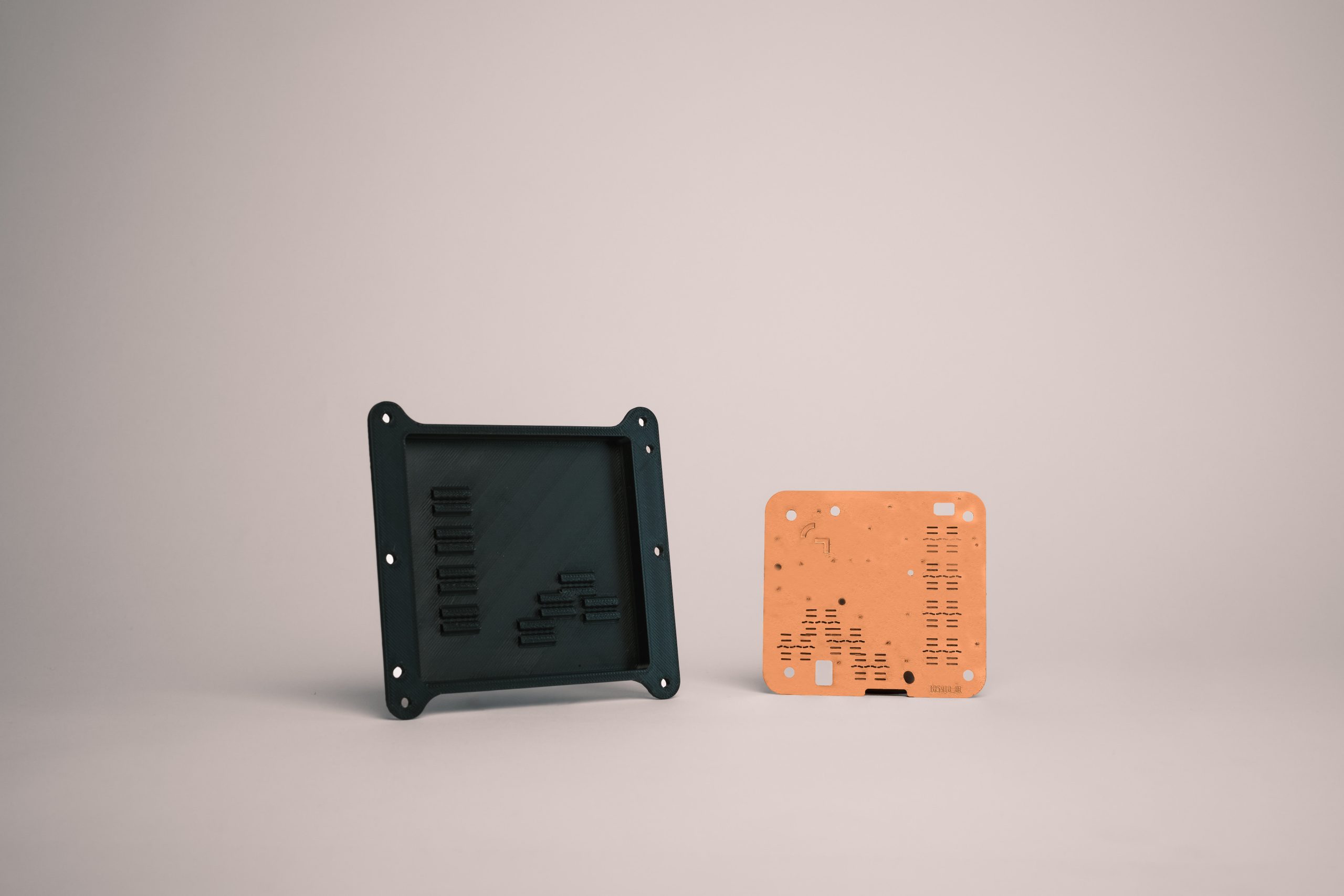
Lensing radome compatible with high-volume manufacturing for increased field-of-view
Lensing Radome for higher volume applications
The development of pattern-shaping can be a great benefit to automotive radar, ensuring the transmit power is most efficiently used over the angular range of the sensor. Although the M-CTO method allows us to shape the radiation pattern, it is too large to be integrated with modern automotive radar. Therefore the fundamental concepts of this method are taken, miniaturized and mechanically simplified, as demonstrated in this paper in the IEEE Transactions on Antennas and Propagation.
The miniaturization is accomplished by working with a very sharp dielectric gradient, which is placed close to the antenna element, where there is high field intensity. The mechanical simplification focusses on monotonic dielectric gradients, together with symmetry planes in the slotted waveguide structure to increase feature sizes. The miniaturization together with the mechanical simplification enable the lens to integrated with a wavelength above the antenna element, using features compatible with injection moulding.

3 applications where the lens radome makes a difference
Sensrad Hugin D1 Imaging Radar
One of the more challenging investigations which were done, was the addition of a lensing radome on the Hugin 4D Imaging Radar from Sensrad. Given the high complexity of the waveguide antenna needed to achieve outstanding performance of this radar sensor, it is clear that redesigning such an antenna is a major challenge. With our lensing radome, we were able to prove that a lens can be added into the radome, enabling rapid prototyping and altering the radiation pattern to increase the sensor’s range. A similar approach can be taken with existing radar sensors and tailoring their radiation patterns to tailor the sensor to alternative applications.
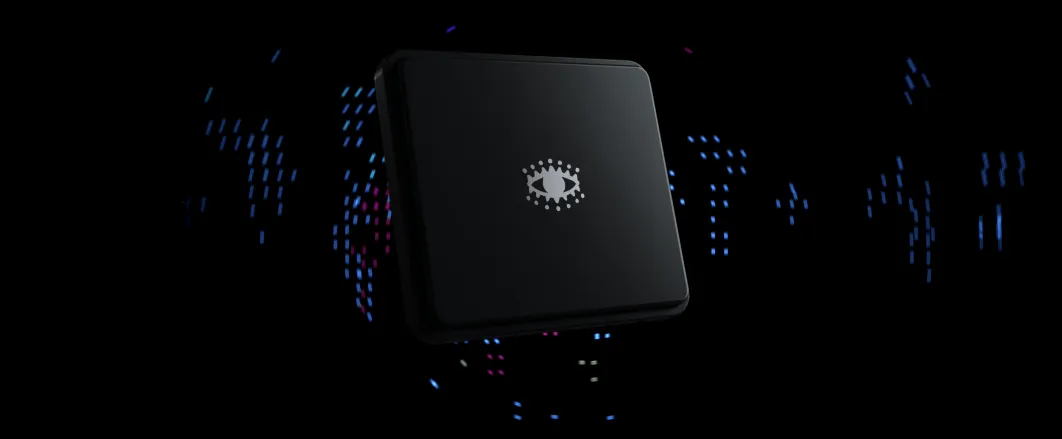
Sensrad’s Hugin D1 4D Imaging Radar
In-cabin radar sensor applications
The lensing concept can be used to increase the field-of-view of the sensor. In-cabin sensing is a key upcoming application. Industry discussions consistently point to extended field-of-view as a decisive advantage, which our lensing radome can deliver.

Corner radar optimisation for urban safety
In a work presented at EuCAP 2026, a corner radar was optimized by adding a lensing radome, which improves the coverage area in urban scenarios. Not only have we seen similar request in the industry to achieve similar tilted patterns, we were also able to demonstrate our solution could increase the detection range for pedestrians, increasing safety on the roads. We envision this approach could improve radar performance in other areas, like lane change assist, traffic monitoring and more, by enabling application specific radiation patterns shaping.
Interested in how our antenna technology can support your development work? We’d be glad to discuss how the lensing radome approach could apply to your project.
